To find every PV module with backsheet cracks before the warranty window closes, inspect the rear of every module in the plant, not a sample: use insulation alarms and the module models installed to decide where to start, capture a close or side view of the rear of each table, and record each affected module with its position, serial number, image and date. Thermography alone is not enough, because a backsheet crack is a visual defect on the rear of the module and often shows no heat until it has already caused an electrical fault.
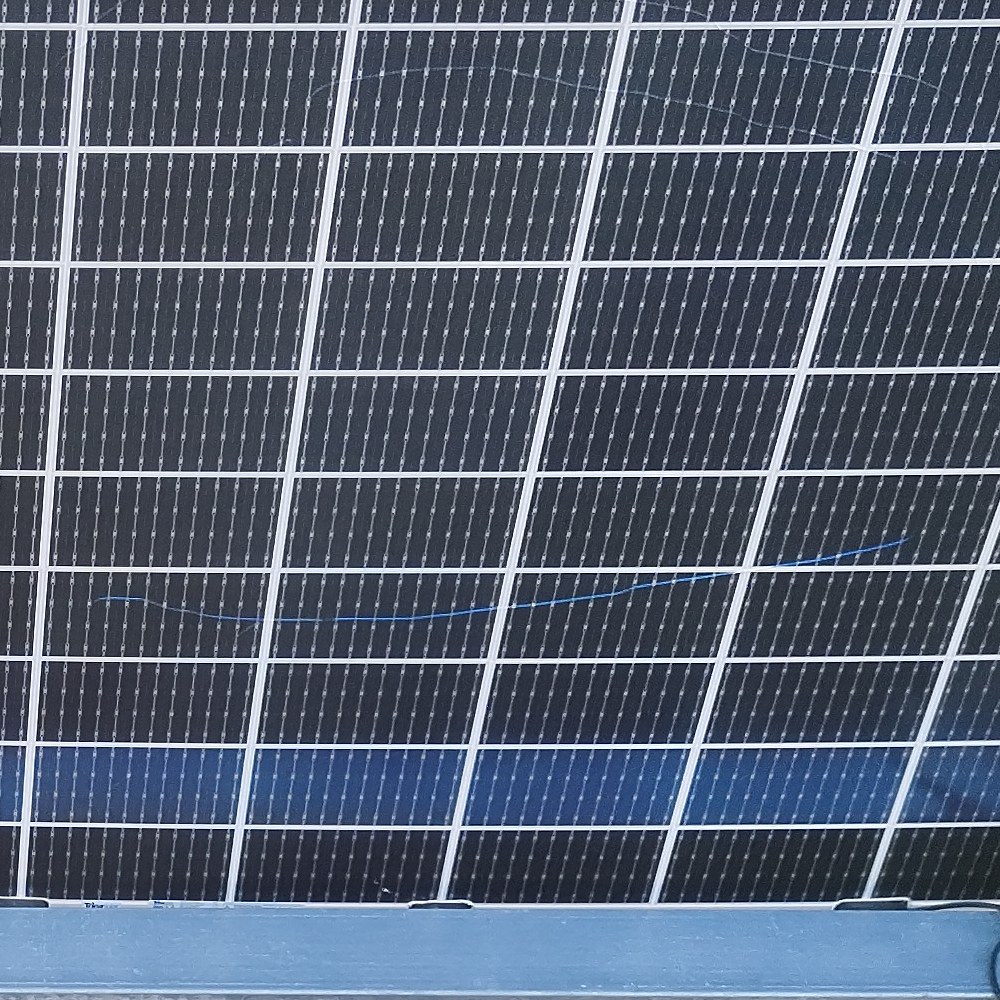
What a backsheet crack is and why it matters
The backsheet is the polymer layer that closes and insulates the rear of a module. When it cracks, the cracks usually run along the gaps between cells or parallel to the busbars, around the junction box or along the edge of the frame. Chalking and yellowing of the rear surface often come first.
A cracked backsheet matters for three reasons:
- Safety. The module loses part of its electrical insulation. Live parts can be exposed, especially when the module is wet.
- Availability. Insulation faults trigger inverter alarms and trips, and the plant loses production while the fault is searched for.
- Durability. Moisture gets in and accelerates corrosion and other degradation inside the module.
Some backsheet materials and production batches have cracked in the field far more than others. That is why a crack found in one module is rarely an isolated case: modules of the same type and batch in the same plant are likely to follow.
Why it is easy to miss
- It cannot be seen from the front. A top-down image, visual or thermal, shows the glass, not the rear.
- Thermography often shows nothing. A crack only produces heat once it has caused an electrical problem, so a thermal inspection alone undercounts the affected modules.
- Walking the rear of every table takes days. On a large plant, a manual check of thousands of rows depends on who does it and when, and the coverage is hard to prove afterwards.
How to find every affected module
- Start from the data you already have. Insulation-resistance alarms and ground-fault trips by inverter, and the module models and batches installed in each area, tell you where to look first. They do not tell you where to stop.
- Inspect the rear of every table in scope. On fixed-tilt structures and trackers with enough clearance, close or side views of the rear can be captured from the air. Low installations may need inspection from the ground.
- Locate each finding at module level. Record block, table, string and position, and the serial number where the plant keeps a module-to-position map.
- Classify consistently. Use the same categories across the plant: where the crack is (between cells, around the junction box, along the frame), how far it extends and whether there is chalking or yellowing.
- State the scope. List the rows inspected and the rows that could not be evaluated, and why, so that “no crack found” is never confused with “not inspected”.
What the warranty claim needs
Requirements depend on the manufacturer and the contract. A solid backsheet claim usually includes, for each affected module, its position and serial number, a clear image of the crack, the date it was detected and its classification, together with the total count and the pattern across the plant. The manufacturer may ask for electrical tests, such as insulation resistance, or for laboratory analysis of sample modules; the inspection record is the basis for planning them. Check the exact terms and dates of the product warranty, because a defect documented after the window closes usually becomes a cost for the owner. Our guide on documenting module defects for warranty claims and FAC explains how to build that record.
A note on safety
A cracked backsheet can expose live parts. Field crews should be qualified for work on energised PV equipment, avoid touching wet modules and follow the plant's isolation procedures before handling any affected module.
How Argos by Solardrone helps
With Argos, the rear of every table in the agreed scope is captured with visual and thermal evidence, each module with backsheet cracks is located at component level with its image and date, and each finding stays open until new evidence shows that the module was replaced. In measured cases where the same plant was inspected on foot and with Argos, Argos found between 2 and 6 times more affected modules. Solardrone has been inspecting solar plants since 2017, analyses more than 400 plants a year and has analysed more than 15 GWp. Read the Argos FAQ or request a free personalised study.