To choose a drone inspection service for a utility-scale solar portfolio, judge each provider on what you can decide with its output, not on the drone or the camera. The questions that matter are whether it covers every module, whether each finding is located at component level with visual and thermal evidence, whether results are comparable across plants and over time, and whether the provider helps you follow each defect until its correction is verified.
This guide is written for owners, IPPs, asset managers and multi-plant O&M providers. It sets out the evaluation criteria, compares the three main types of provider and ends with a checklist of questions to ask before signing.
Why the choice matters more in a portfolio than in a single plant
In a portfolio, the cost of a poor inspection is not only a missed defect: it is inconsistent information. Each plant ends up with a different contractor, report format and definition of severity, so the owner cannot compare assets, supervise the O&M provider or know which findings are still open. A good provider reduces that uncertainty; a weak one adds another PDF to the pile.
Nine criteria to evaluate a provider
1. Full coverage or sampling
Ask whether every module, string and relevant component is inspected, or only a sample. Full coverage is the basis of an auditable record and of warranty claims, where every affected module counts. The report should state explicitly which areas were not evaluated and why.
2. Location at component level
A finding is only useful if a technician can find it. Check whether each anomaly is located by table, string and module position (and serial number when the plant has a module-to-position map), not just by GPS coordinates on an image.
3. Visual and thermal evidence
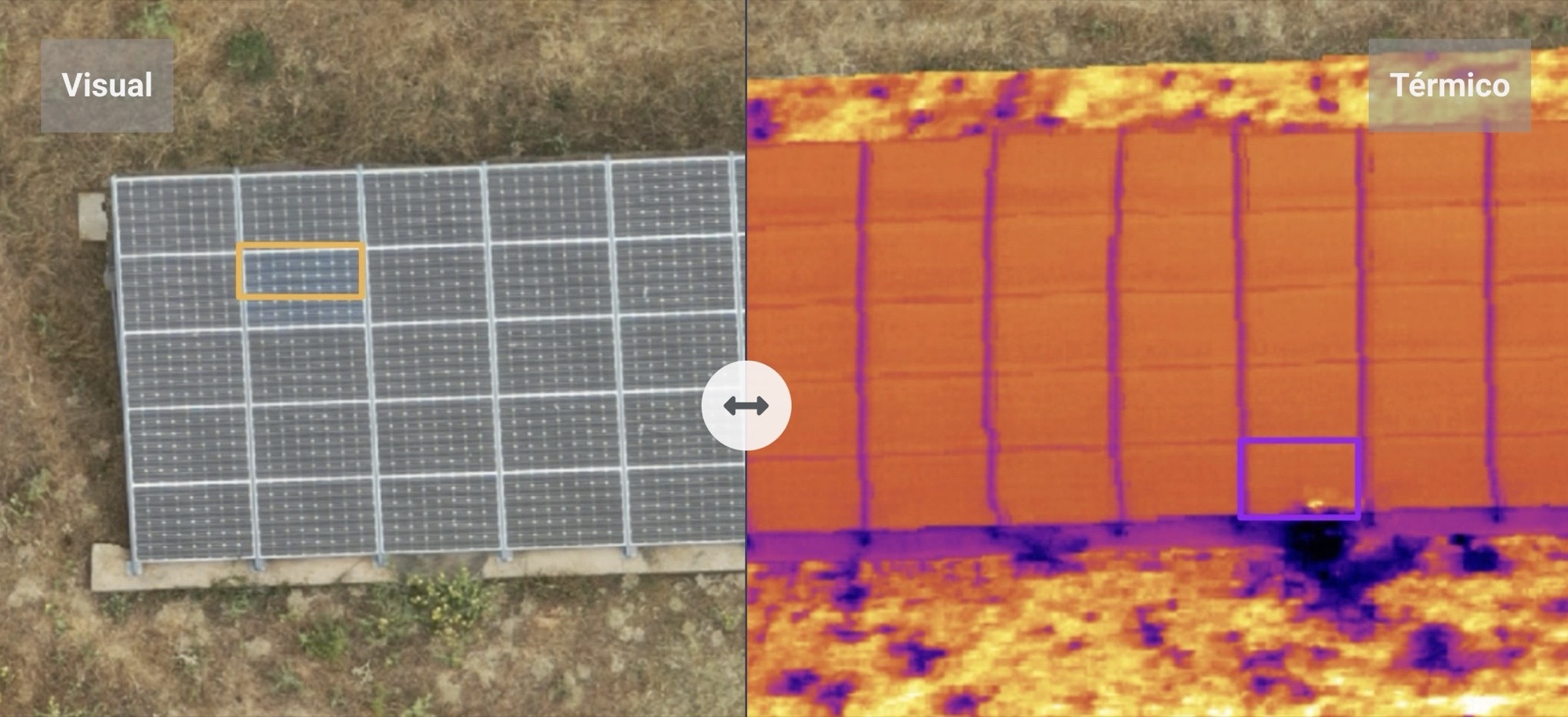
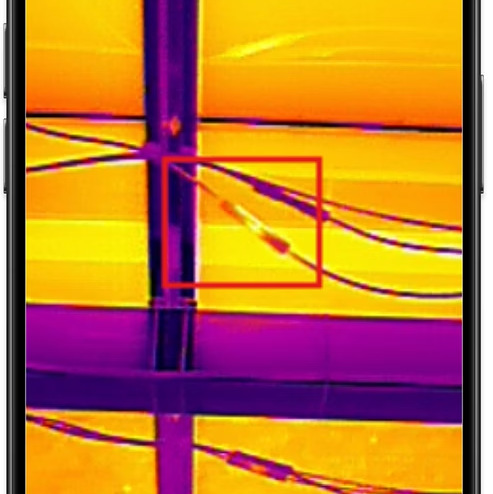
Thermography finds hot cells, bypass diodes, open substrings and overheated connectors. Other relevant defects, such as broken glass, backsheet cracks, disconnected ground cables or structural damage, need visual evidence at sufficient resolution. Ask which defect types each capture mode covers, and whether thermal captures follow recognised conditions such as those in IEC TS 62446-3 (for example, a minimum irradiance on the module plane).
4. Traceability to verified closure
Detection is the start of the work, not the end. Check whether each finding can be assigned, repaired and closed only when new evidence shows the correction, and whether you can see at any time what is detected, assigned, repaired and verified.
5. Fit with O&M and the CMMS
The output must fit the technicians, procedures and maintenance management system (CMMS) you already have. Ask for the export format (CSV, API) and for an example of a work order generated from a finding.
6. Independence for the owner
If the O&M or EPC contractor inspects its own work, the owner does not have an independent view. For acceptance, warranty claims and supervision of providers, an independent and homogeneous physical record carries more weight.
7. Frequency and capture modality
An annual inspection answers different questions from recurring capture. Ask which modalities the provider offers (piloted drone, drone based at the plant in a docking station), what frequency each allows and what authorisations the operation requires in your country.
8. Deliverable format
Ask for a real sample deliverable. A long list of anomalies is not the same as a map of the plant with priorities: the deliverable should tell you what is urgent corrective, what is non-urgent corrective and what is preventive, and why.
9. How return is measured
Agree in advance how you will judge the result: defects found compared with your previous method, warranty value documented within the claim window, field hours needed per located finding and time from detection to verified closure. Avoided incidents are hard to prove, so use leading indicators such as critical findings closed and verified.
Three types of provider compared
| Inspection service (pilot and thermography) | Analysis software platform | Managed physical-control service (such as Argos by Solardrone) | |
|---|---|---|---|
| Who captures | The provider, per inspection | You or your drone contractor | Solardrone pilots or your own team, trained on the Argos protocol |
| Typical output | Anomaly report at a point in time | Processed data and anomalies in the platform | Living record of the physical state, with priorities and status of each finding |
| Follow-up to closure | Your responsibility | Depends on your workflow and tools | Included: assignment, repair evidence and verification |
| Consistency across the portfolio | Depends on each contractor | Depends on the quality of each capture | One method and format for every plant |
| Best when | You need a one-off or contractual inspection | You already run your own drone team and want to keep capture in-house | You manage several plants and need to decide, supervise and prove closure |
When Argos is not the best option
Argos by Solardrone is designed for owners and O&M providers of large ground-mounted plants and portfolios. It is probably not the right choice if you only need a single annual thermography report to meet a contractual requirement or if your assets are small rooftop or residential installations. In those cases, an inspection service or a software platform will usually fit better.
Checklist: questions to ask any provider
- Do you inspect every module, or a sample? How do you report the areas you could not evaluate?
- How is each finding located: table, string, module position, serial number?
- Which defect types does each capture mode cover, visual and thermal?
- Under which conditions do you capture thermal images, and which standard do you follow?
- How do you define priority: which criteria, and how many levels?
- How is a repair verified, and who approves the closure?
- Can findings be exported to our CMMS, by CSV or API? Can we see an example?
- Are you independent from our O&M and EPC contractors?
- Are results comparable between plants and between inspections of the same plant?
- Which capture modalities and frequencies can you offer, and with which authorisations?
- Who owns the data, and can we take it with us if we change provider?
- Can we see a real deliverable from a comparable plant?
About Solardrone
Solardrone has been inspecting solar plants since 2017, analyses more than 400 plants a year and has analysed more than 15 GWp. Argos is its service for knowing the real physical state of each plant and being clear about where to act. See the Argos FAQ or request a free personalised study.